
Profile

Bruce Yu
Dr. Yu is a biophysicist and biochemist by training. He has worked on protein biophysics, the development of magnetic resonance imaging (MRI) agents, and biomaterials engineering.
Dr. Yu has synthesized dendrimer imaging agents for multi-color F-19 MRI and advanced MRI technology to evaluate the mechanical properties of soft materials and biological tissues. He is also interested in the link between molecular chirality and material mechanical properties, and how chirality can be exploited to create biomaterials with novel mechanical properties for cell growth and differentiation. Dr. Yu is an inventor of several new technologies and holds six issued patents, including for dendrimer synthesis, biomaterials engineering, and noninvasive analytical technologies.
CURRENT RESEARCH
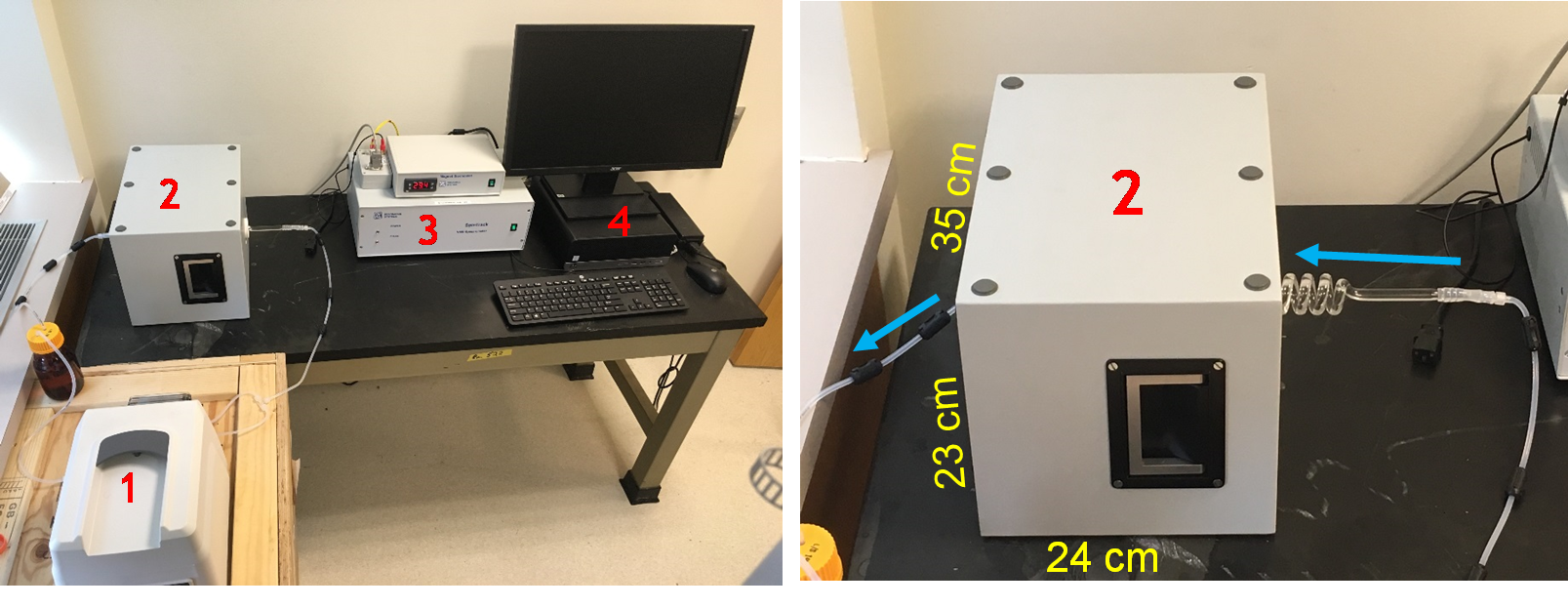
Current research in the Yu lab involves regulatory science for biologics and nano-drugs. Specifically, the Yu group is developing nondestructive analytical technologies for pharmaceutical solutions of drug substances and drug products and for product inspection, using a variety of physicochemical techniques.
Process Analytical Technology
Biomanufacturing requires process analytical technologies (PATs) for monitoring and control. Dr. Yu’s group develops contact-free in-line PAT for real-time monitoring of bioprocessing. The PAT is based on flow water proton nuclear magnetic resonance (flow wNMR). He is collaborating with pharma/biotech companies to implement flow wNMR in industrial settings. Vaccine manufacturing is a major focus.
Nondestructive Analytics
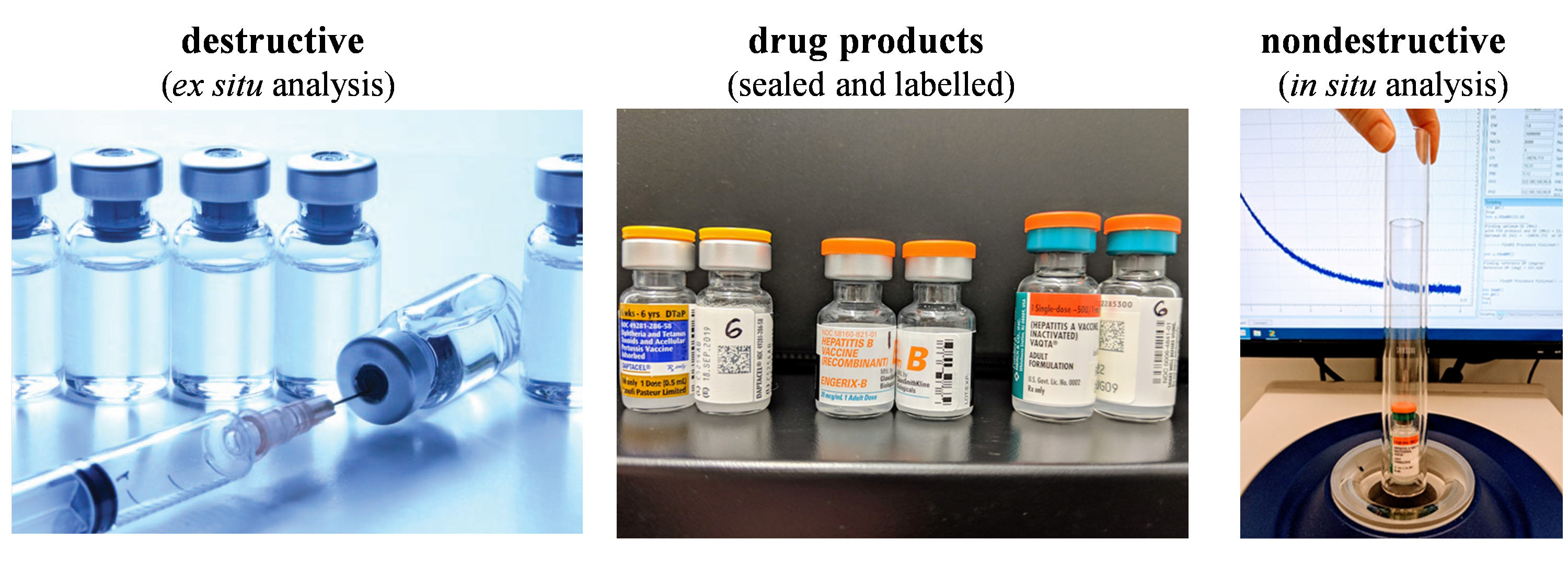
Dr. Yu’s group develops nondestructive analytics for biologics and other complex drugs. The nondestructive analytics are based on wNMR, and applications include drug formulation, drug substance characterization, and drug product inspection. The unique capability of wNMR is that it can quantitatively inspect finished drug products without opening the vials. The Yu group has applied wNMR to insulin products and vaccines.
Publications
- Correction: Preventive Pharmacovigilance: timely and precise prevention of adverse events through person-level patient screening and dose-level product surveillance.
- Preventive Pharmacovigilance: timely and precise prevention of adverse events through person-level patient screening and dose-level product surveillance.
- Sedimentation behavior of quality and freeze-damaged aluminum-adjuvanted vaccines by wNMR.
- Analysis of the Adsorbed Vaccine Formulations Using Water Proton Nuclear Magnetic Resonance-Comparison with Optical Analytics.
- Correlated analytical and functional evaluation of higher order structure perturbations from oxidation of NISTmAb.
- Excipient Innovation Through Precompetitive Research.
- Rapid and Noninvasive Quantification of Capsid Gene Filling Level Using Water Proton Nuclear Magnetic Resonance.
- Knockout of Anopheles stephensi immune gene LRIM1 by CRISPR-Cas9 reveals its unexpected role in reproduction and vector competence.
- All vials are not the same: Potential role of vaccine quality in vaccine adverse reactions.
- Inspecting Insulin Products Using Water Proton NMR. I. Noninvasive vs Invasive Inspection.
- Evaluation of the Physicochemical Properties of the Iron Nanoparticle Drug Products: Brand and Generic Sodium Ferric Gluconate.
- Grand Challenges in Pharmaceutical Research Series: Ridding the Cold Chain for Biologics.
- Magnetic Resonance Relaxometry for Determination of Protein Concentration and Aggregation.
- Flow Water Proton NMR: In-Line Process Analytical Technology for Continuous Biomanufacturing.
- Correction to: Nondestructive Quantitative Inspection of Drug Products Using Benchtop NMR Relaxometry-the Case of NovoMix® 30.
- Nondestructive Quantitative Inspection of Drug Products Using Benchtop NMR Relaxometry-the Case of NovoMix® 30.
- Use of Water Proton NMR to Characterize Protein Aggregates: Gauging the Response and Sensitivity.
- Monitoring dendrimer conformational transition using 19 F and 1 H2 O NMR.
- Improving Biopharmaceutical Safety through Verification-Based Quality Control.
- A single amino acid substitution confers B-cell clonogenic activity to the HIV-1 matrix protein p17.
- Water Proton NMR: A Tool for Protein Aggregation Characterization.
- Development of a glycoconjugate vaccine to prevent invasive Salmonella Typhimurium infections in sub-Saharan Africa.
- Using Small-Angle Scattering Techniques to Understand Mechanical Properties of Biopolymer-Based Biomaterials.
- Turning defense into offense: defensin mimetics as novel antibiotics targeting lipid II.
- Fluorinated dendrimers as imaging agents for ¹⁹F MRI.
- Split of chiral degeneracy in mechanical and structural properties of oligopeptide-polysaccharide biomaterials.
- Chirality-Mediated Mechanical and Structural Properties of Oligopeptide Hydrogels.
- An interplay between electrostatic and polar interactions in peptide hydrogels.
- Effects of gadolinium chelate on the evolution of the nanoscale structure in peptide hydrogels.
- Enhancing biocompatibility of D-oligopeptide hydrogels by negative charges.
- The Effect of Ionic Strength on the Mechanical, Structural and Transport Properties of Peptide Hydrogels.
- Avoiding steric congestion in dendrimer growth through proportionate branching: a twist on da Vinci's rule of tree branching.
- Interrogation of MDM2 phosphorylation in p53 activation using native chemical ligation: the functional role of Ser17 phosphorylation in MDM2 reexamined.
- Linear Dependency of NMR Relaxation Rates on Shear Modulus in Hydrogels.
- Effects of chain length on oligopeptide hydrogelation.
- Sol and gel states in peptide hydrogels visualized by Gd(III)-enhanced magnetic resonance imaging.
- Viscoelastic properties and nanoscale structures of composite oligopeptide-polysaccharide hydrogels.
- Diffusion of small molecules inside a peptide hydrogel.
- Fluorinated paramagnetic chelates as potential multi-chromic 19F tracer agents.
- The Effect of Column and Eluent Fluorination on the Retention and Separation of non-Fluorinated Amino Acids and Proteins by HPLC.
- Effect of temperature during assembly on the structure and mechanical properties of peptide-based materials.
- Separation of Fluorinated Amino Acids and Oligopeptides from their Non-fluorinated Counterparts using High-performance Liquid Chromatography.
- Fluorous mixture synthesis of asymmetric dendrimers.
- Chemical shift assignments for human apurinic/apyrimidinic endonuclease 1.
- Backbone assignment of HINT1 protein, a mouse histidine triad nucleotide binding protein.
- Delivered dose: a drug-centric phenotype for chemotherapy dose individualization.
- Symmetry-guided design and fluorous synthesis of a stable and rapidly excreted imaging tracer for (19)F MRI.
- Enantioselective synthesis of (2R, 3S)- and (2S, 3R)-4,4,4-trifluoro-N-Fmoc-O-tert-butyl-threonine and their racemization-free incorporation into oligopeptides via solid-phase synthesis.
- The synthesis of a geminally perfluoro-tert-butylated beta-amino acid and its protected forms as a potential pharmacokinetic modulator and reporter for peptide-based pharmaceuticals.