
Profile

James Culver
Professor
Culver Group (301) 405-2912 jculver@umd.eduThe research focus in Dr. James Culver’s laboratory centers on understanding virus biology and its role in disease, and applying these insights into engineering viruses and other biological components for application in nano-based systems and devices. The Culver lab uses numerous scientific approaches and collaborates with scientists in fields ranging from structural biology to microfabrication. The lab’s primary goal is to utilize discoveries in virus biology to develop new approaches for their control and application.
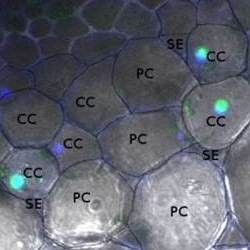
SE, sieve elements.
CURRENT RESEARCH
Virus-Host Interactions
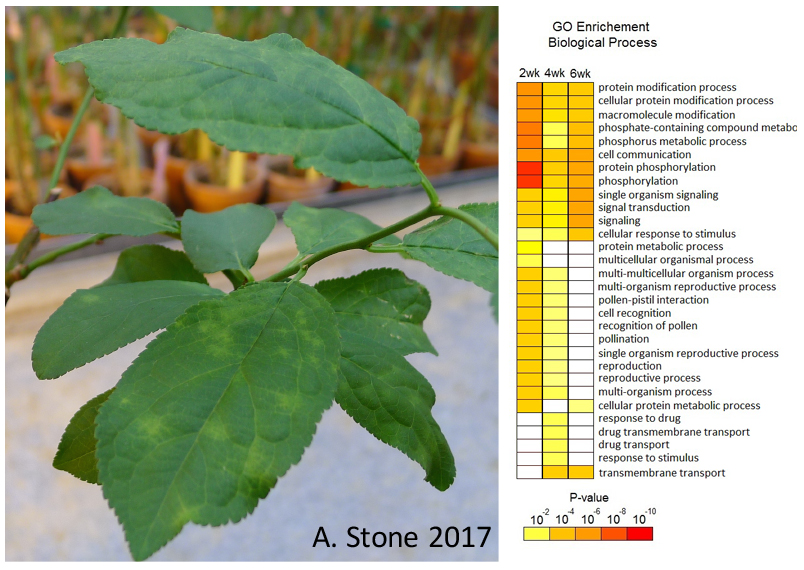
Viruses cause significant reductions in food, fiber and forage throughout the world. Yet despite their importance, we still understand relatively little of the disease processes through which viruses reduce crop productivity. Our biological studies focus on understanding how plant viruses cause disease or induce resistance responses. One area of study is directed at understanding the molecular mechanisms used by viruses to usurp the plant’s vascular tissues and facilitate their movement throughout the plant. The lab is currently characterizing specific plant–virus interactions and cell responses that occur within the vascular tissues of infected plants. These studies utilize a variety of virus - plant systems, including a Tobacco mosaic virus – Arabidopsis system and a Plum Pox Virus - Prunus fruit trees system.
Another focus area addresses the identification of signaling pathways involved in disease development. These studies examine changes in the host plant genome and proteome to identify host genes and pathways altered during the infection process. These insights serve to link disrupted genes or pathways to specific disease responses and virus-host interactions and functions. Our long-term goal is to utilize information from these studies to develop crop plants that do not support virus spread and/or disease development.
Virus-Based Nanotechnology
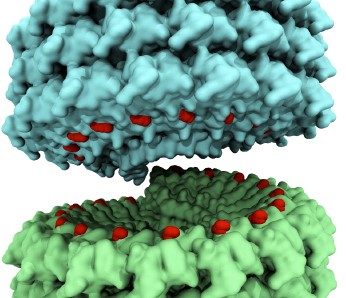
Advances in nanotechnology offer significant improvements in a range of applications including, lightweight materials with greater strength, increased energy efficiency for electronic devices, and better sensors for a range of environmental and manufacturing uses. Advances in nanotechnology require the development of systems for the design, modeling, and synthesis of nanoscale materials. Many biological molecules function on this scale and possess unique properties that impart the ability to assume defined shapes and assemblies, as well as interact with specific chemical or biological targets. The Culver lab used simple RNA plant viruses as templates for the self-assembly and patterning of novel nanomaterials and is developing methods to produce arrays of functionalized viruses for use in sensors, energy harvesting, and drug delivery. The main goal of the virus-based nanotechnology project is to integrate renewable biological components into the manufacture of nanoscale materials and devices.
Publications
- Transgene-free genome editing in citrus and poplar trees using positive and negative selection markers.
- Genomic insights reveal community structure and phylogenetic associations of endohyphal bacteria and viruses in fungal endophytes.
- Qualitative Methods: Centering Patient Voices in Developmental and Behavioral Pediatrics Research.
- Citrus phloem specific transcriptional profiling through the development of a citrus tristeza virus expressed translating ribosome affinity purification system.
- Dynamic changes impact the plum pox virus population structure during leaf and bud development.
- Transglutaminase-mediated assembly of multi-enzyme pathway onto TMV brush surfaces for synthesis of bacterial autoinducer-2.
- Viral Hacks of the Plant Vasculature: The Role of Phloem Alterations in Systemic Virus Infection.
- Tobacco mosaic virus infection disproportionately impacts phloem associated translatomes in Arabidopsis thaliana and Nicotiana benthamiana.
- Biofabrication of Tobacco mosaic virus-nanoscaffolded supercapacitors via temporal capillary microfluidics.
- Capillary Microfluidics-Assembled Virus-like Particle Bionanoreceptor Interfaces for Label-Free Biosensing.
- Architecturing hierarchical function layers on self-assembled viral templates as 3D nano-array electrodes for integrated Li-ion microbatteries.
- SAXS characterization of genetically engineered tobacco mosaic virus nanorods coated with palladium in the absence of external reducing agents.
- Biological templates for antireflective current collectors for photoelectrochemical cell applications.
- DNA binding specificity of ATAF2, a NAC domain transcription factor targeted for degradation by Tobacco mosaic virus.
- Biotemplated aqueous-phase palladium crystallization in the absence of external reducing agents.
- Biofabrication to build the biology-device interface.
- Virus-enabled silicon anode for lithium-ion batteries.
- Helicase ATPase activity of the Tobacco mosaic virus 126-kDa protein modulates replicase complex assembly.
- Biofabrication methods for the patterned assembly and synthesis of viral nanotemplates.
- Quantitative study of Au(III) and Pd(II) ion biosorption on genetically engineered Tobacco mosaic virus.
- Interaction of the Tobacco mosaic virus replicase protein with a NAC domain transcription factor is associated with the suppression of systemic host defenses.
- Preparation of silica stabilized Tobacco mosaic virus templates for the production of metal and layered nanoparticles.
- Self-assembly of virus-structured high surface area nanomaterials and their application as battery electrodes.
- Tobacco mosaic virus replicase-auxin/indole acetic acid protein interactions: reprogramming the auxin response pathway to enhance virus infection.
- Optimization of virus imprinting methods to improve selectivity and reduce nonspecific binding.
- Virus-induced disease: altering host physiology one interaction at a time.
- TMV microarrays: hybridization-based assembly of DNA-programmed viral nanotemplates.
- The Tobacco mosaic virus replicase protein disrupts the localization and function of interacting Aux/IAA proteins.
- Deposition of platinum clusters on surface-modified Tobacco mosaic virus.
- Molecularly imprinted polymers for tobacco mosaic virus recognition.
- Characterization of silica-coated tobacco mosaic virus.
- Effect of CuCl2 concentration on the aggregation and mineralization of Tobacco mosaic virus biotemplate.
- Biofabrication with chitosan.
- Patterned assembly of genetically modified viral nanotemplates via nucleic acid hybridization.
- Improved metal cluster deposition on a genetically engineered tobacco mosaic virus template.
- Interaction of the tobacco mosaic virus replicase protein with the Aux/IAA protein PAP1/IAA26 is associated with disease development.