
Dozens of test tubes in a holder

IBBR Graduate Student Contributes to Breakthrough Study on Chestnut Tree Restoration Published in Science

Thu, Feb 12, 2026
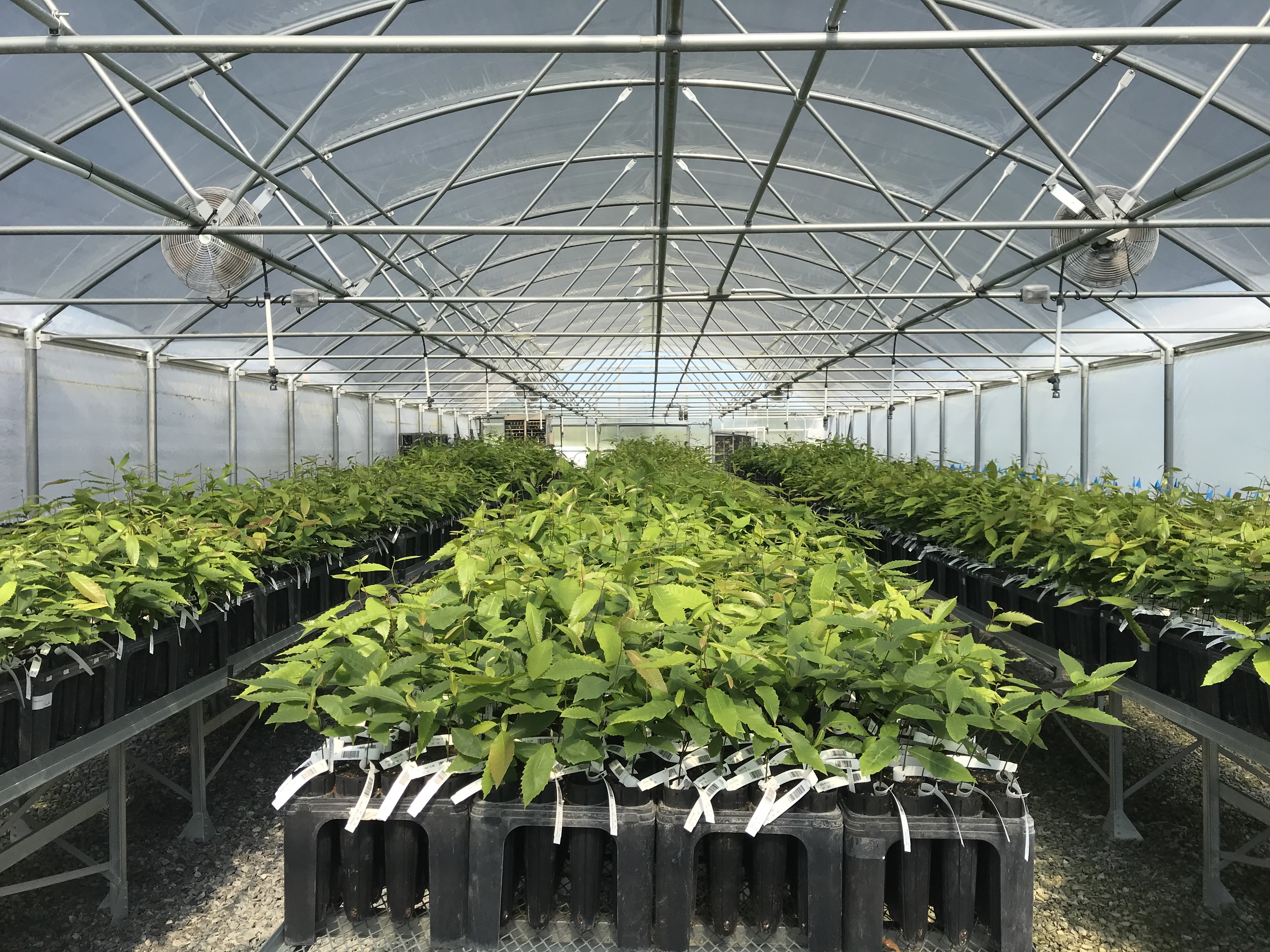
Greenhouse full of chestnut seedlings. Photo credit: The American Chestnut Foundation (TACF).

A new study published February 12, 2026, in Science, one of the world’s leading journals in scientific research and discovery, demonstrates that modern genomic tools can accelerate restoration of the American chestnut tree. The study, entitled “Genomic Approaches to Accelerate American Chestnut Restoration,” describes the genetics of disease resistance in chestnuts and compares several strategies for restoring this iconic species to its native range.

Among the co-authors is Bruce Levine, a graduate student in the Xiao Lab at the Institute for Bioscience and Biotechnology Research (IBBR) and the University of Maryland College of Agriculture and Natural Resources (AGNR). His work is funded by The American Chestnut Foundation (TACF), and outside the university he is active in TACF’s chestnut breeding program in Maryland.

Prior to 1900, giant centuries old American chestnut trees dominated the forests in the eastern United States. However, in 1904, importation from Asia of a parasitic fungus Cryphonectria parasitica initiated the chestnut blight pandemic, rendering the American chestnut functionally extinct in its native range by 1950. For over 100 years, scientists have been exploring ways to restore this keystone species to improve forest health, revive a once-important timber industry, restore wildlife food sources, and increase carbon sequestration. As part of these efforts, Levine studies genes in Cryphonectria parasitica associated with pathogenicity. His research helps advance understanding of how the fungus causes disease, knowledge that is critical for developing durable resistance strategies.
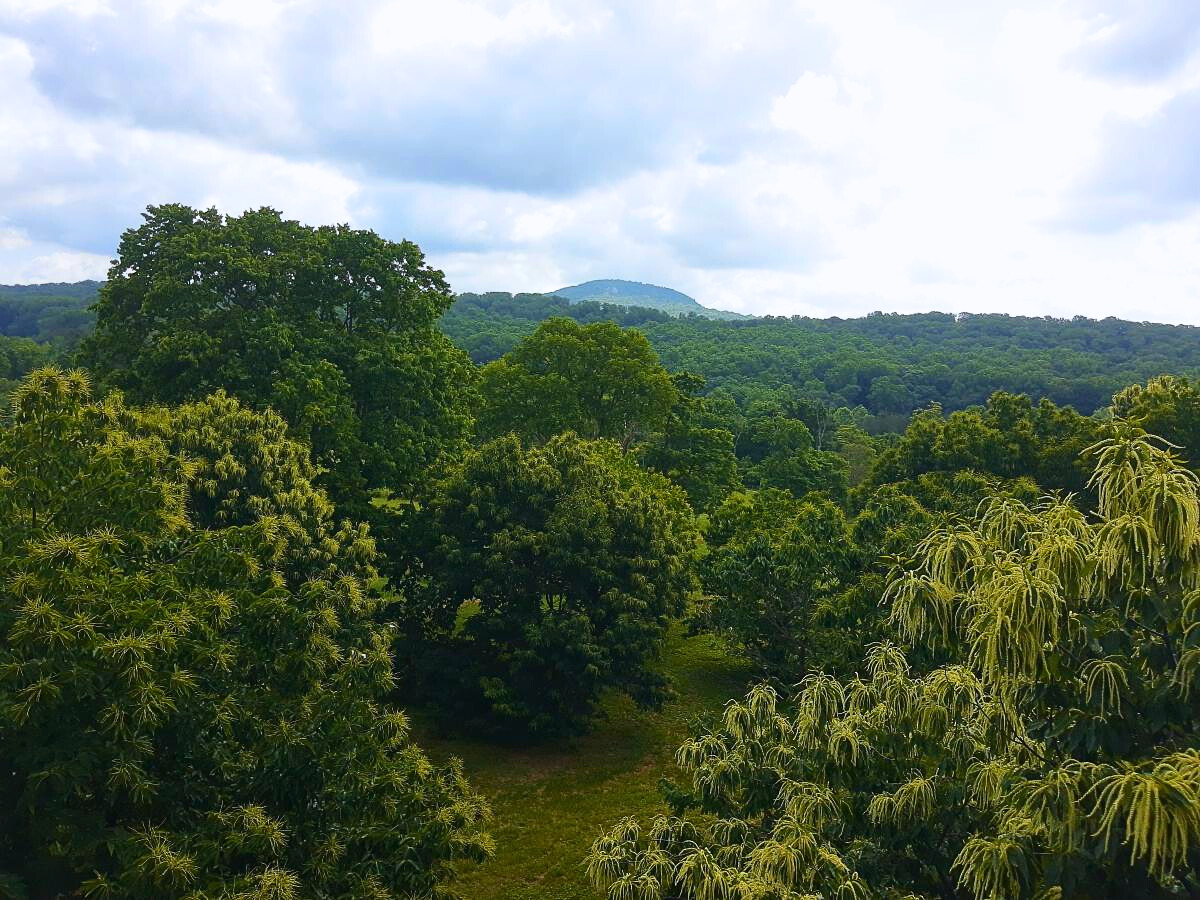
Chestnut trees flowering in an orchard with Sugarloaf Mountain in the background. Photo credit: Bruce Levine.

To address chestnut blight and another invasive disease, Phytophthora root rot, TACF and other researchers have been breeding trees for disease resistance as well as carrying out genetic, ecological and biotechnological research aimed at restoring the American chestnut to its native range. The Science paper draws on TACF’s genotyping and phenotyping data to describe the genetics of disease resistance in chestnuts and compares several different strategies for restoration. These include breeding the natural resistance of Asian chestnut species into the American chestnut population, selective breeding among large surviving American chestnuts, using biotechnology approaches to introduce novel forms of disease resistance into American chestnuts, and studies of metabolites that may be responsible for disease resistance.

“This paper draws attention to the progress being made toward chestnut restoration as a result of what we have learned from our efforts up to now,” Levine said. “TACF’s recurrent genomic selection program is moving us in the right direction, but the paper also shows the potential to accelerate our progress through other lines of research.” This application of science to an ecological problem has implications beyond the American chestnut, to include other ecological challenges facing native plants battling the onslaught of novel pathogens that are being constantly introduced as a consequence of globalization.

Read more:
Coverage from the University of Maryland College of Agriculture and Natural Resources
Coverage from The American Chestnut Foundation