
IBBR Study Reveals How T Cells Recognize a Common Cancer Mutation
Tue, Jul 21, 2026
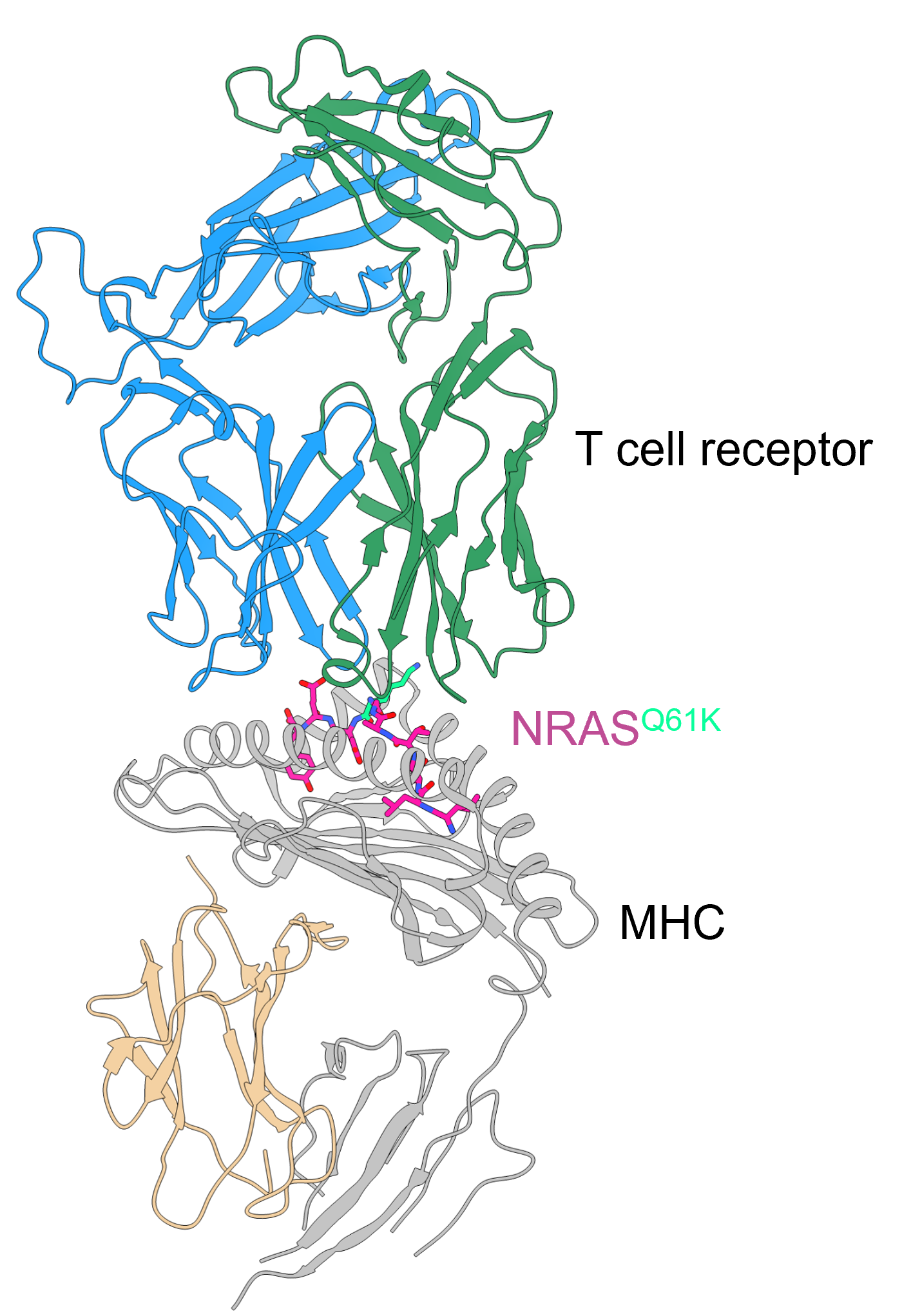
Our body’s immune system must be able to differentiate infected and diseased cells from healthy cells. T cells play an important role in this process. Using T cell receptors (TCRs) on their surfaces, they travel around the body searching for antigens that match their TCRs and then trigger an immune response. Understanding how exactly these receptors are able to identify abnormal cells, such as cancer cells, is critical in developing targeted immunotherapies.
A recent study published in Structure, entitled “Structural basis for oligoclonal T cell recognition of a shared NRAS cancer neoantigen,” explores a common mutation associated with melanoma: NRAS Q61K. Using structural biology techniques, IBBR researchers from the University of Maryland, College Park, and the National Institute for Standards and Technology (NIST) selected two different TCRs isolated from melanoma patients and found that each could selectively recognize mutated NRAS proteins, while avoiding the normal NRAS found in healthy cells.
The researchers then determined the high-resolution structures of each complex to visualize how the TCRs recognized the mutated NRAS. They compared these structures with one they had previously solved showing a different human TCR engaging the same mutant NRAS antigen. Surprisingly, each of the three TCRs bound to NRAS differently. The structures also revealed how the Q61K mutation itself aids in making the protein visible to T cells, helping explain how the immune system is able to selectively recognize tumor cells.
This work provides insights for adoptive cell therapy, in which a patient’s own immune cells are extracted, enhanced in a lab, and placed back in the patient, to fight cancer. These TCRs showed strong specificity for NRAS Q61K and thus have potential as candidates for future cancer immunotherapies.
These findings reveal a deeper understanding of how our bodies can recognize cancer-specific mutations and advance ongoing efforts to harness the immune system to fight cancer.