News Stories

Eunkyoung Kim Expands Biomanufacturing Research at IBBR
IBBR warmly welcomes Eunkyoung Kim, Assistant Research Professor, to her new role at IBBR, where she will continue her work on advancing quantitative redox measurement technologies to better understand complex biological systems. Dr. Kim’s research is driven by the vision that redox processes provide a dynamic window into the physiological...
.png)
Maryland Bionetworking Summit 10/8
Network and socialize with fellow biopharma, academic, and government professionals at our Maryland Bionetworking Summit—a bioscience-focused series designed to highlight our area’s unique life science ecosystem and to promote interactions between its diverse stakeholders. This in-person evening event will consist of a networking social with refreshments, followed by a talk...

Dr. John Moult Honored with 2027 ASBMB DeLano Award for Computational Biosciences
We are proud to congratulate Dr. John Moult on receiving the 2027 American Society for Biochemistry and Molecular Biology (ASBMB) DeLano Award for Computational Biosciences. This prestigious award recognizes a scientist who develops or applies innovative and accessible computational approaches to advance research in the life sciences at the molecular...
About IBBR
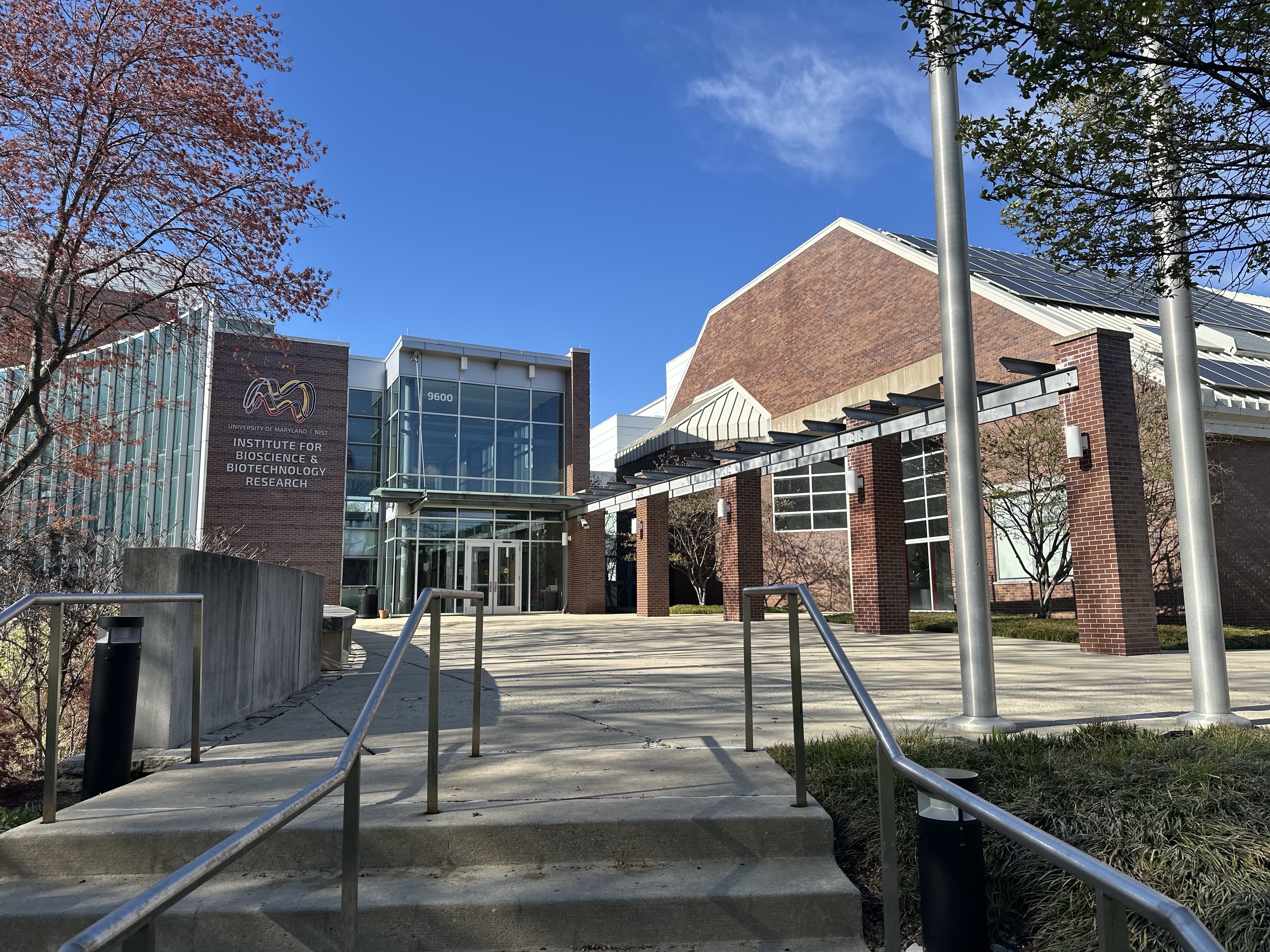
IBBR is a joint research enterprise of the University of Maryland, College Park, the University of Maryland, Baltimore, and the National Institute of Standards and Technology.
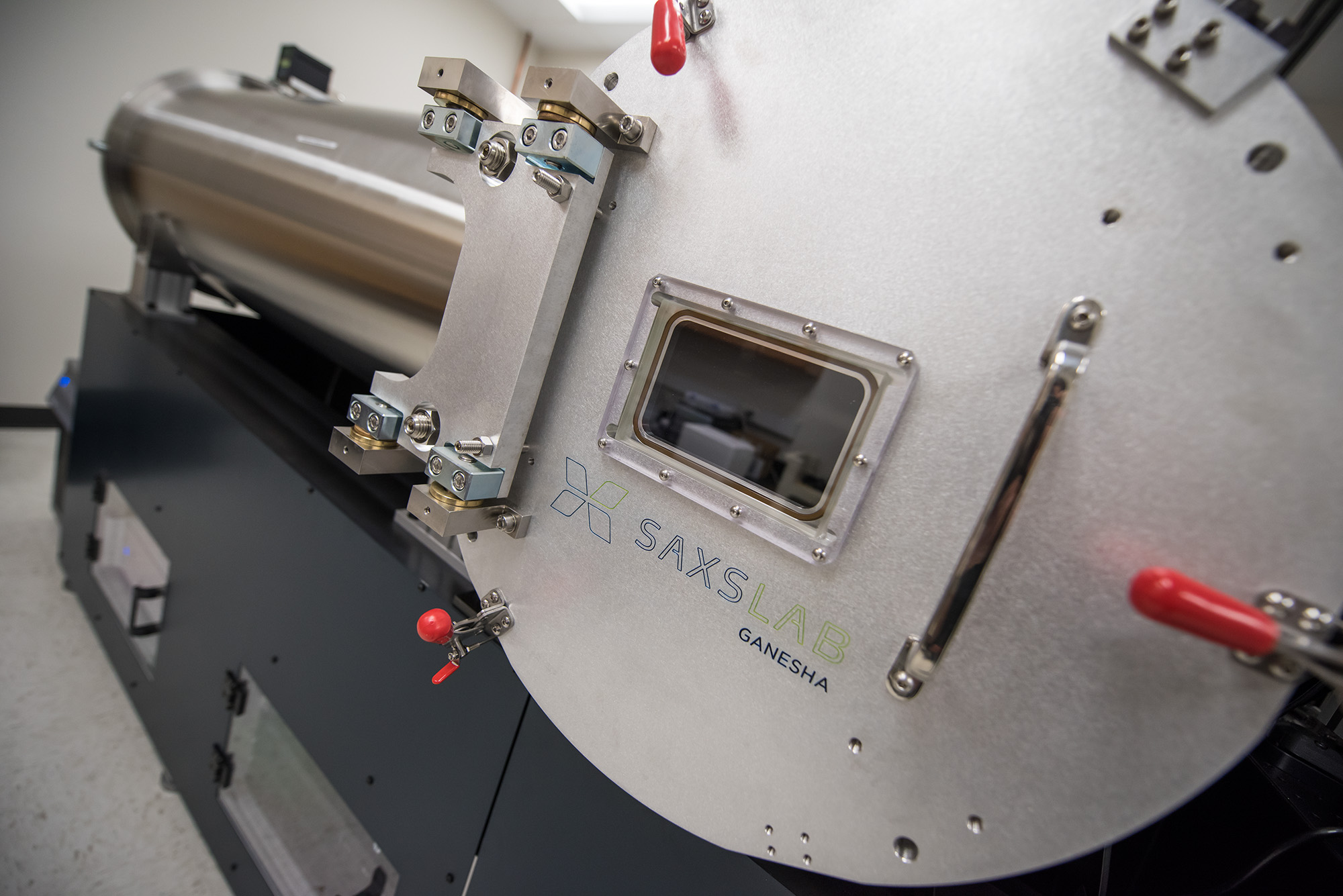
IBBR leverages state-of-art integrative methods for bioanalytical, biophysical and structural characterization of biomolecules: cryo-electron microscopy, nuclear magnetic resonance, x-ray crystallography, small angle neutron and x-ray scattering and mass spectrometry.
IBBR researchers seek to advance therapeutic development, biomanufacturing, and state-of-the-art measurement technologies, to support accelerated delivery of safe and effective medicines to the public.
IBBR is a major initiative and supported in part by the University of Maryland Strategic Partnership: MPowering the State (MPower) , an initiative designed to achieve innovation and impact through collaboration.
Connecting
IBBR Commons
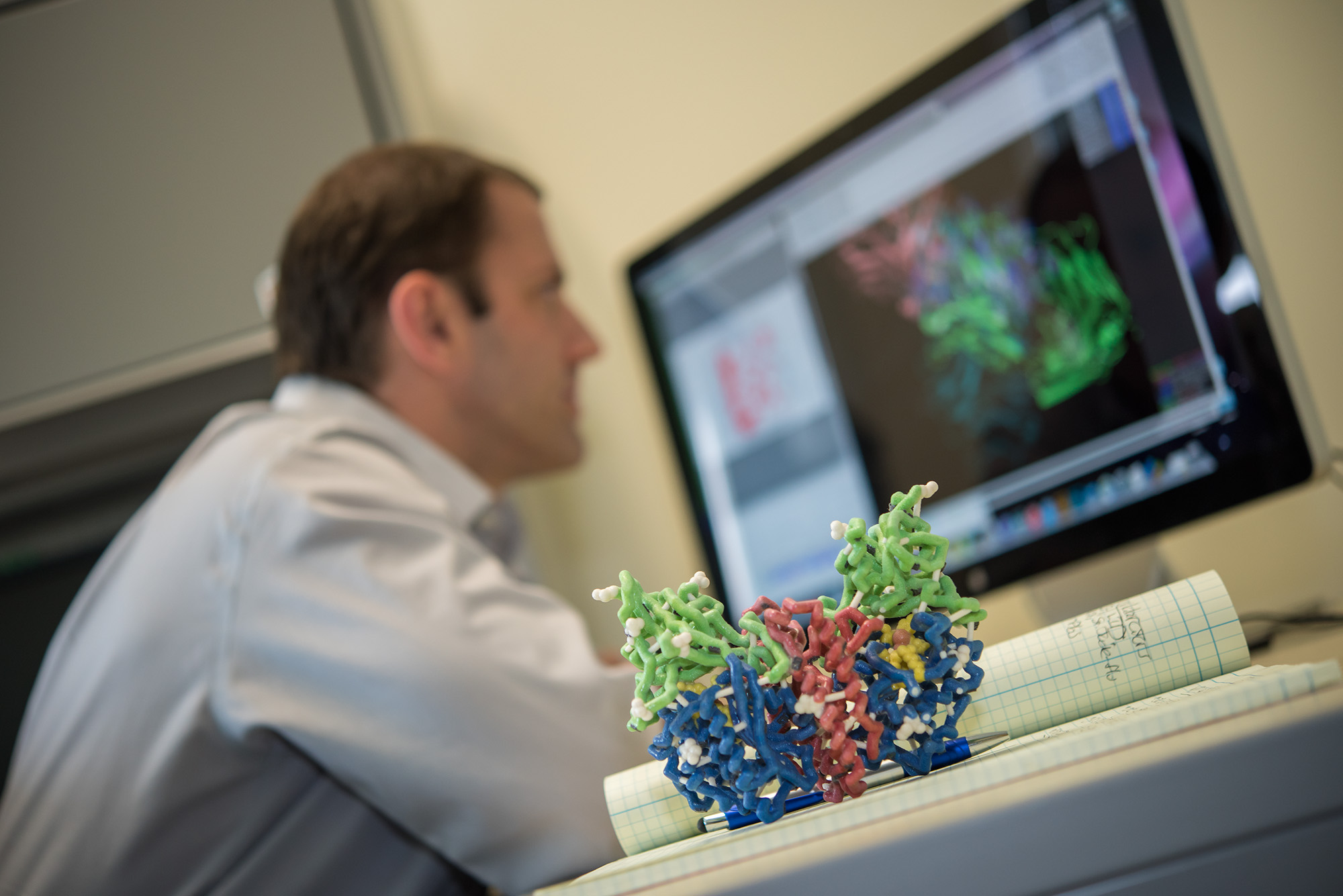
Sophisticated state-of-the-art instrumentation and facilities, and in-house expertise located in shared space and dedicated to advance research, support collaboration and foster innovation of methods. Instrumentation and facilities include tools for high-resolution structural biology, bioanalytical and biophysical measurement, protein engineering and cell culture, advanced computation including artificial intelligence and deep learning methods, and general laboratory services. These capabilities and advanced training are available to IBBR scientists and collaborators.
IBBR Postdoc Program
The IBBR Postdoc Program (IPP) focuses on collaborative research involving basic science and technology development that advances therapeutic development, vaccine development, and biomanufacturing. IPP Fellow project teams are designed with a combination of the IPP Fellow career goals and priorities of project mentors who can be from academic, government, and/or industrial laboratories throughout the University of Maryland, NIST and the I-270 corridor.
NMRPipe
IBBR is home to NMRPipe, a popular collection of programs and scripts for manipulating multidimensional Nuclear Magnetic Resonance (NMR) data. The use of NMRPipe is noted in roughly 40% of all NMR structures accepted into the Protein Data Bank.
Upcoming Events
NIST Group Meeting; Jaekyun Jeon
Seminar: Heather Feaga, Cornell
Seminar: Richard Kuhn, Purdue
Recent Publications
DC+: A web server for the analysis of residual dipolar couplings.
A server-based program, DC+, is presented for analysis of residual dipolar couplings (RDCs) and residual chemical shift anisotropy (RCSA) in proteins and nucleic acids. The program aims to meet...
Automated pharmacophore hypothesis generator for SILCS-Pharm: ph4gen.
Here we present ph4gen, a tool for the automated generation of pharmacophore hypotheses developed for use with the site identification by ligand competitive saturation (SILCS) technology. It...
Boosting genome editing in perennial plants by CRISPR-Combo mediated morphogenic gene activation.
A major bottleneck in genome editing of many perennial plants is their recalcitrance to transformation and regeneration. To boost genome editing in such perennial crops, transcriptional...
Shape-shifting proteins and the subtlety in their form and function.
Shape-shifting proteins include intrinsically disordered proteins (IDPs) and fold-switching, or metamorphic proteins. They make up a significant fraction of the "dark proteome" in the protein...
Docking-score landscapes shape active-learning performance across Vina, Glide, and SILCS.
The rapid expansion of large chemical libraries has created a need for virtual screening workflows that are both efficient and accurate. Active learning (AL) offers a scalable strategy by...