$1.9 Million NIH Award Renewal Advances AI-Driven Immunology Research at IBBR
Thu, Aug 13, 2026
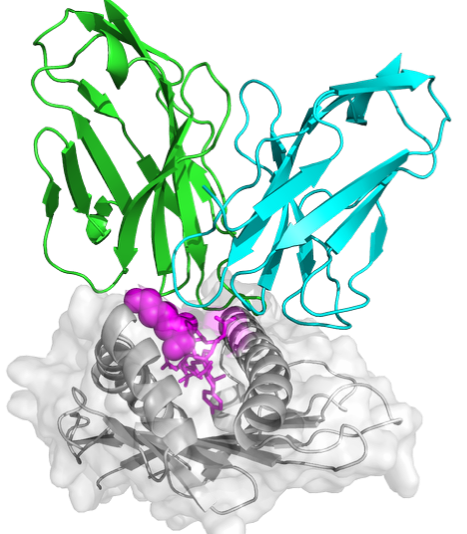
IBBR Fellow and UMD Department of Cell Biology and Molecular Genetics Associate Professor Dr. Brian Pierce has received a renewal of his NIH Maximizing Investigators' Research Award (MIRA), award number 2R35GM144083. The renewed award will support the project "Algorithms and Resources for High-Resolution Modeling and Design of Immune Receptor Recognition," providing an additional $1.9 million over the next 4.5 years for the Pierce Lab's research on antibodies, T cell receptors (TCRs), and the computational tools used to model and design their interactions with antigens.
The Pierce Lab studies the immune system, focusing on the interactions between antibodies, TCRs, and their molecular targets. By integrating structural biology, artificial intelligence (AI), machine learning, and bioinformatics, the lab has developed computational tools, predictive models, and publicly available resources, including the TCR3d structural database and TCRmodel2 tool, that have contributed to advances in immunology.
A potential application of this work is the development of patient-specific immunotherapies at scale. For example, CAR T-cell therapy is an advanced cancer treatment that reprograms a patient’s own T cells to recognize and destroy cancer cells. Because each patient’s cancer is unique, these therapies must currently be tailored to the individual, making the process time-consuming and costly. By using AI to design T cell receptors that specifically recognize a patient’s cancer, Dr. Pierce’s research could help shorten the time and reduce the cost required to develop individualized immunotherapies.
The award will also support ongoing collaborative projects with fellow IBBR researchers including Drs. Roy Mariuzza and John Orban. Together, the researchers will continue developing and applying computational approaches to better understand immune recognition and enable the design of next-generation immunotherapies.